

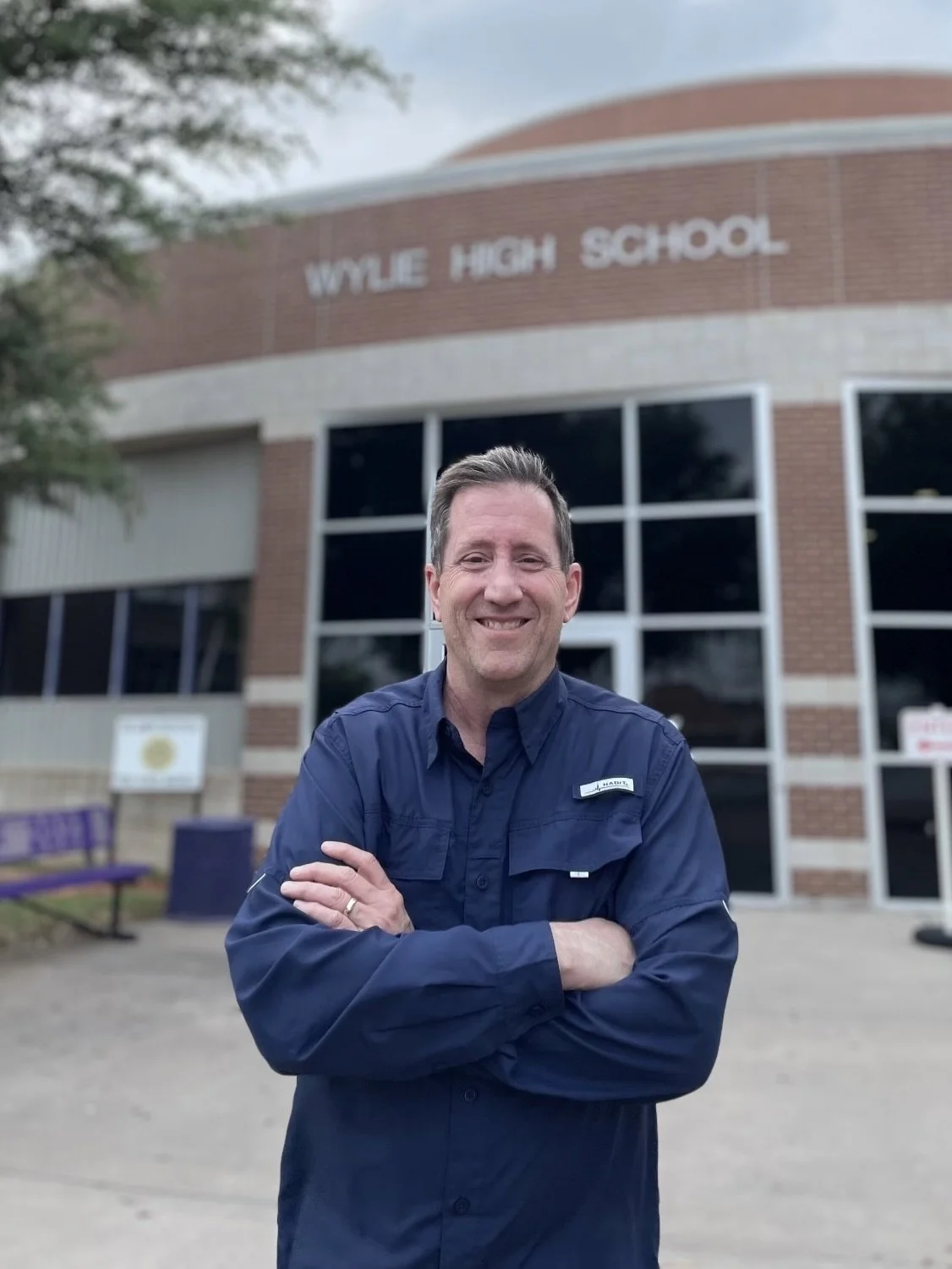
NSCA Chaplain Jay Miller shares his experience in this primer to help school chaplains gain access into schools and be successful. Enjoy these Tips from Texas.
Building Relationships
Step 1:
Earning Trust
There is only one chance to make a good first impression. People do not care how much you know, until they know how much you care.
The genuine is easy to spot. Professionalism and a heart for servant leadership shows trustworthiness
Administrative Support
Step 2: Find out the biggest need for the ISD and each school. Ask the Principal what is their biggest problem and start there. Chronic absenteeism, bullying, self-harm or classroom disruptions may be targeted as a first step.
The Wylie ISD Superintendent has been so pleased with the positive changes in his schools that he wrote a reference letter to be distributed to other schools who are considering school chaplaincy. He freely gives out his personal phone number to those with questions. His favorite statement is; “You don’t know how much you need a School Chaplain until after you have one.”
Acceptance from Teachers:
After consistent relationship building, the teachers who initially questioned the presence of a chaplain have gradually come to seek support. Now, at the start of every day, various teachers are stopping the chaplains in the hallways asking for help for themselves and/or their students. Teacher work satisfication and retention can be accomplished through school chaplaincy.
At first, it took time for the faculty to fully accept a chaplain at school, but the connection ultimately clicked! Chaplain Jay Miller gained the trust of the teachers while effectively resolving issues. By relieving their burdens, teachers can better focus on teaching.
Step 3. Play the long game. Be patient. Consistently building relationships will open doors. Simply being present speaks volumes and shows accountability. Be approachable.
Jay became the go-to-person for help with continuous needs of every sort. He shifts quickly from things like reducing sports performance anxiety to helping a school family navigate a dysfunctional marriage. Most recently, he helped others who witnessed a fatality on campus.
Being in the right place at the right time when a need arises and accomplishing a solution will be remembered. Then you will be requested and referred from teacher to teacher and from student to student.
Step 4: Student Acceptance.
Students who might normally hesitate to speak to a chaplain, find themselves seeking out chaplaincy care. Those of alternative lifestyles or difficult family situations begin to open up once they see that chaplains are there to listen and help without judgment. Once trust is established, meaningful conversations follow.
Some students approach by testing the chaplain for their reactions. Confident chaplains avoid the appearance of being shocked or uncomfortable. This will disarm hesitation and encourage full disclosure when engaging in dialog.
Chronic Absenteeism
Students missing more than three days in a six-week period were at significant risk. The consequences included lower grades, strained relationships, and increased discipline problems. Chaplains have time to spend with students on a one-on-one basis. This kind of attention lets the student know that they are heard and valued —perhaps for the first time.
Chaplain Miller met with the attendance secretary and requested a list of students who had missed more than three days. He began reaching out to them personally. Understanding the reasons behind their absences was his goal. He was struck by how quickly students opened up when they realized someone was truly listening and wanted to help them complete their high school journey.
Stories from the Field
One student attended school regularly but frequently left classes throughout the day. Chaplains recognize the signs of serious anxiety. Often a multidisciplinary approach is necessary and students are connected with the Licensed Professional Counselor (LPC). Secular methods are valuable and spiritual care is successful; working in tandom or when one falls short. Chaplain Miller continued to also make himself available. When anxiety struck, the student would find the chaplain to practice breathing exercises together for about thirty seconds. Once he was calm, he could return to class. With consistent support, the student learned to cope wth anxiety and successfully graduated.
Supporting Students in ISS and DAEP
The second focus area was connecting with students placed in In-School Suspension (ISS) or the Disciplinary Alternative Education Program (DAEP). These students faced various school-related challenges, such as excessive tardies, fighting, or using a THC vape on campus.
We applied the same relational approach—offering a safe, non-punitive space for them to process difficult situations with a caring adult.
One student was in DAEP for possessing a THC vape. Chaplain Miller gently asked her questions. He discussed how people sometimes turn to drugs to avoid emotional pain and wondered what pain she might be trying to escape. This helped her feel safe to speak openly. She was dealing with grief of losing a parent and did not know how to cope. After chaplain support, she has been doing much better. Although she is still facing challenges, she is working through them effectively, earning better grades, and staying on track.
Collaborating with School Counselors
Building connections with on-campus counselors. When Chaplain Miller first arrived, they were unsure how to utilize his role. However, as he shared information about the students he was supporting and asked for their insights, they gradually began referring students who needed additional help.
The progress was gradual, but the counselors now regularly recommend students to the chaplain. Many felt frustrated because they wanted to invest more deeply in students’ lives but were limited by heavy job demands. Once they realized they could trust me, new doors of collaboration opened.
Supporting Teachers and Staff
The principal made it clear that she wanted Chaplain Miller on campus specifically to help her teachers, who face many challenges and often need additional emotional support.
He first met the teachers during an in-service day and began building trust by sharing that all conversations with him were completely confidential. I started visiting teachers during their conference periods—introducing myself and keeping conversations short (about five minutes). I continued this consistently.
A Difficult Crisis
Proving competence in a crisis is one of the most effective demonstrations of the need for School Chaplains. Effective care across all spectrums, stages and ages during and after a crisis is a huge litmus test.
Connecting with Other Service Providers
Chaplains should have a resource list with contact information for connecting students and staff with needs outside of school or as an extension of school-wide care. Chaplains must partner with other support services in the community. For one example, if a student is in the hospital, who is the hospital chaplain. Can you call and help connect the family in need? Sometimes it’s helping find a food bank, etc.
Mentors Care links students with adults who meet weekly on campus. Mark Blakely invited Chaplain Miller into his dedicated classroom space to meet and support students. Miller has also helped identify additional students who would benefit from their program.
Communities In Schools Chaplain Miller collaborates closely with program leader Nikki Valdez, particularly when supporting young women, and frequently refer students to her.
He also works closely with our LPC, Rick Sanders, the direct supervisor. Chaplain serves as a clearinghouse—helping some students directly while connecting others to more intensive professional support. Chaplains can be a bridge to services and connect students with resources they might not otherwise access.
Students in Crises
Chaplains get involved when students are cutting themselves or at risk for other self harm, addictions or simply not thriving. Chaplains notice “invisible students” who are trying not to be seen because that is often their only known coping skill. Chaplains notice how students arrive or leave the school. Are they dressed sufficiently for the weather extremes. Are they bruised or fearful?
Chaplains Continue Education
Crisis Prevention, Threat Assessment Team strategies, Active Shooter, Stop the Bleed training must be continually updated in the chaplain’s mind and ready to act. Before, during and after crisis management is when School Chaplain care shines, because prayer and spiritual matters are most demanded during life and death situations.
An Unexpected Area of Help: Student-Athletes
A teacher may ask the chaplain to check on a usually strong student who becomes disruptive. Students who play sports often have an exagerated pressure to perform. This can be crippling for some and managing performance anxiety in sports can spill over into all the demands of life. Once the coping skills and self confidence through faith is realized, real transformation can take place.
Chaplains collaborates with the coaches. Ironically, Chaplain Miller has had a relationship with the Texas Rangers sports psychologist. A focus was built on trusting muscle memory, relaxing, and returning to the joy of the game. Faith can play a big part in putting the joy of sports into perspective with overall life.
Evidence Based Outcomes
Chaplains, be diligent in keeping a log of your work for data collection demonstrating the effectiveness of School Chaplaincy. Keeping privacy premium, continue sharing your chaplain-student-teacher success stories with the NSCA Academy Director, Chaplain Lorena Garza and the Editorial Writer, Dorothy Kozar.
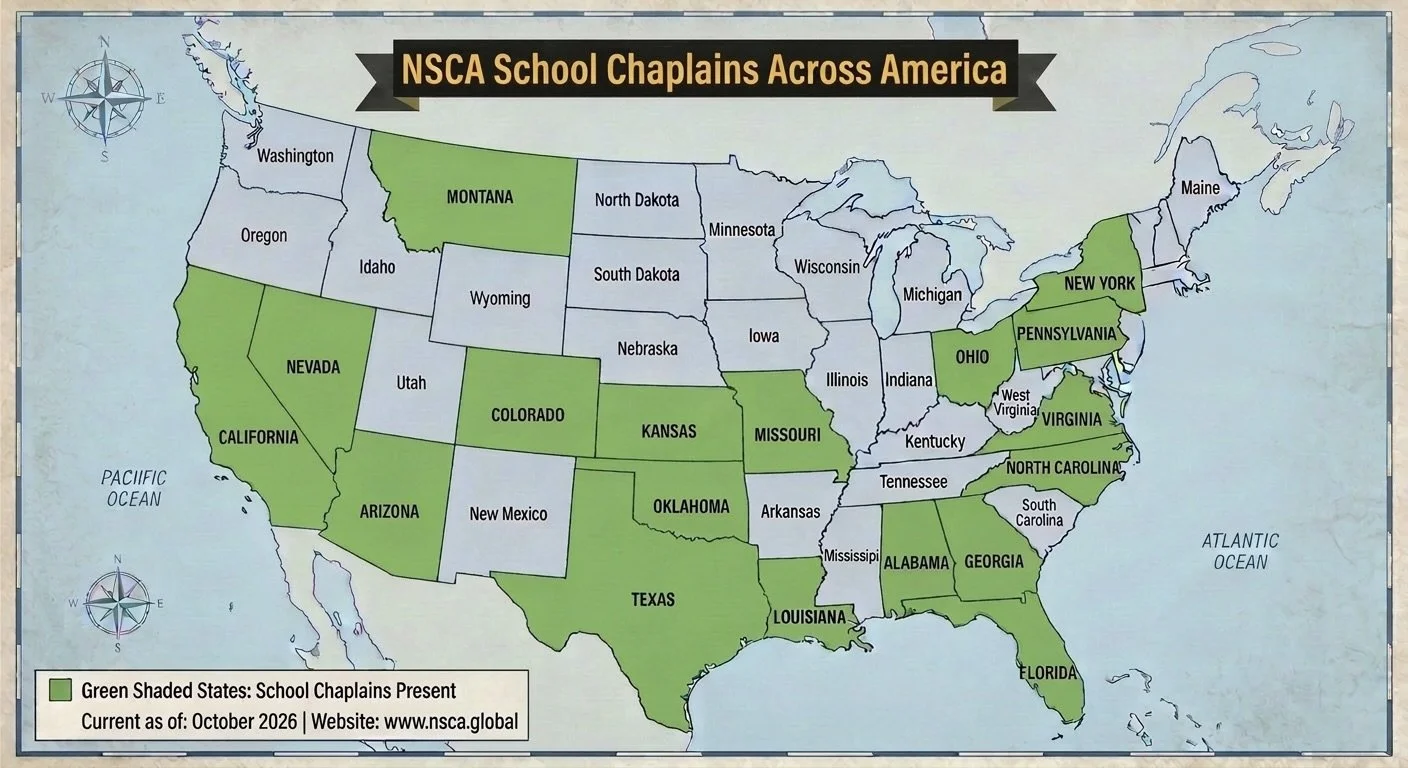
This primer is a successful example of Abilene, Texas ISD, which is the first district in America to embrace School Chaplaincy and have expanded this care to a total of seven of their schools. Chaplain Jay Miller began at Wylie High School. Three other Chaplains Brent Aiken, Greg Morris and Melissa Stephenson along with Miller are covering five schools. Because of the positive outcomes, two more schools are requesting chaplain care. Chaplain Michal Walston will cover one of the two additional schools
IN SUMMARY
The template for being welcomed as a chaplain in schools is to put your care for other humans and your faith into practice according to the needs at the moment. Remember John 15:5. Each student, teacher and school should be assessed uniquely and personally. School Chaplaincy is not a cookie-cutter ministry. Listen to what is being said (and not said). Perservere in love. Walk in faith and compassion, which is your fuel for success Chaplains depend on God to do what humans alone cannot accomplish.
Remember that Chaplain care is already available and deemed necessary on a federal and state level as well as in the market place. Schools need and deserve the same spiritual care and you are the one to provide it.
Be confident, meet the school principals, H.R. department staff, the teachers with the NSCA Packet in hand. You have the education, the certification training and the crises management courses under your belt. You can provide spiritual care that goes beyond where other methods fail. Find your support parterner chaplains and pray for each other.
NSCA support is always available. Keep resources available to yourself, such as a copy of Rocky' Malloy’s latest book: FAITHFUL, LAWFUL and EXEMPLARY, SCHOOL CHAPLAINS (A Field Guide for Certified Public School District Employees) https://www.amazon.com/dp/B0HG2DTJHK?lv=shuf&channelId=500&plpRedirect=mhFallback
You’ve got this!
